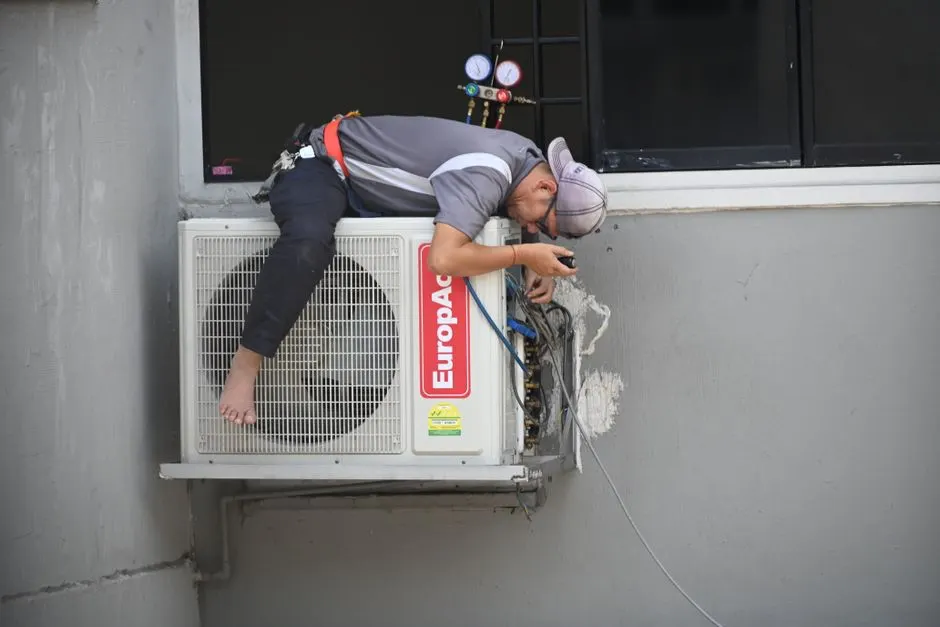
Your HVAC system smells musty in South Venice because mold, mildew, or bacteria are growing on a wet surface inside the system - almost always the evaporator coil, the drain pan, or the ductwork just past the air handler. In our climate, that growth starts fast: a coil that stays damp for 48 hours at 78°F is enough for spores to colonize.
That is the whole answer. Everything below explains why South Venice homes get hit harder than most, how to trace the smell to its source, what a real fix costs in 2026, and when it is time to stop guessing and call someone.
The Short Answer: Moisture Plus Florida Heat
An HVAC musty smell in South Venice FL is a biological problem, not a mechanical one - the system is doing its job of cooling, but it is also leaving water where it shouldn't.
Your air conditioner removes two things from the air: heat and moisture. A 3-ton system running on a typical South Venice afternoon pulls 15 to 25 gallons of water out of the air per day. That water is supposed to run down the coil, into the drain pan, and out the condensate line. When any part of that path fails - a clogged drain, an oversized unit that short-cycles, a dirty coil, a leaky return duct - the water sits. Standing water plus 80% relative humidity equals mold in under two days.
Here is the definitional piece: a musty HVAC smell is the odor of microbial volatile organic compounds (mVOCs) - gases released by mold and bacteria as they digest dust, skin cells, and organic matter that has collected on wet system surfaces. You are not smelling mold itself. You are smelling what it is eating.
Why South Venice Homes Are a Magnet for Musty AC Smells
South Venice sits in one of the most humid pockets of Sarasota County, and the housing stock here makes the problem worse than it is two miles inland.
Three local factors stack up:
- Year-round humidity. South Venice averages 76% relative humidity, and from June through September it rarely drops below 70%. Your AC runs 10 to 14 hours a day in summer, which means the coil is wet almost constantly.
- Older, leakier ductwork. Much of South Venice was built between 1960 and 1990, and a large share of those homes still have original or once-replaced flex duct in the attic. Attic temperatures hit 140°F in July. Duct leaks pull that hot, humid attic air straight into your supply stream.
- Coastal salt air. Being a few blocks from the Gulf means salt corrosion on coil fins and drain pans. Pitted aluminum holds water in ways smooth metal does not.
We see the same pattern in nearby neighborhoods too. Homeowners we work with on HVAC in South Venice and just north in Venice Gardens HVAC describe the identical smell - sweet, damp, like a wet basement - and it almost always traces back to the same three or four causes.
The 6 Most Common Sources of a Musty HVAC Smell
When we run a musty-smell diagnostic in South Venice, we check these six locations in order. The first four account for roughly 90% of the calls we run.
1. The evaporator coil
The coil is the cold, wet part of your system, and it is where mold grows first. A coil that has not been cleaned in three or more years will have a visible film of biological growth on the fins. You will smell it strongest in the first 60 seconds after the system starts.
2. The condensate drain pan and line
If the drain line clogs - and in South Venice, algae and biofilm clog them constantly - water backs up into the pan and sits. A pan holding even a quarter-inch of standing water will produce a musty smell within 48 hours. This is the cheapest problem to fix and the most common one we find.
3. The ductwork
Dust, pollen, and skin cells coat the inside of ductwork over time. Add humidity from a leaky return and you have a mold farm running the length of your attic. Musty smell from vents in South Venice Florida that gets stronger in one or two rooms usually points to a specific duct run, not the whole system.
4. A wet or dirty air handler cabinet
The blower compartment sits downstream of the coil. If the coil has been throwing water or the cabinet insulation has gotten wet, the fiberglass liner holds moisture and grows mold. We replace wet cabinet insulation rather than try to clean it.
5. A clogged or damp air filter
A filter that has been in place more than 90 days in this climate traps moisture along with dust. Change it every 60 days from May through October. This is the one thing you can fix yourself in five minutes.
6. A short-cycling system
An oversized AC cools the house fast and shuts off before it has run long enough to dehumidify. The coil stays wet between cycles. If your system runs in 5-to-8-minute bursts and your house still feels clammy, this is likely your problem - and it is a sizing issue, not a cleaning issue.
Is a Musty HVAC Smell Dangerous in South Venice?
A musty HVAC smell is not immediately dangerous, but it is a signal you should not ignore - especially if anyone in the house has asthma, allergies, or a compromised immune system.
The mold species that grow on AC coils and in ductwork are common environmental molds, not the toxic black mold you read about. The health effects are real but usually mild: sinus congestion, headaches, itchy eyes, a cough that gets worse when the AC kicks on. If someone in your home already has respiratory issues, those symptoms can escalate.
The bigger risk is what the smell tells you about the system. A musty smell almost always means there is standing water somewhere it should not be. That water corrodes the coil, rusts the drain pan, and eventually causes a refrigerant leak or a blower failure. A $180 coil cleaning today prevents a $2,400 coil replacement in 18 months.
If you smell musty air and see visible dark growth on vents or around the air handler, get it looked at this week, not next month.
How Do I Get Rid of Musty Smell in HVAC in South Venice?
Getting rid of a musty smell in HVAC in South Venice means eliminating the moisture source, killing the growth, and keeping it from coming back - in that order.
Here is the sequence we follow, from what you can do yourself to what requires a technician:
- Change the air filter. Do this first. A damp, loaded filter will re-seed the whole system no matter what else you fix.
- Check the condensate drain. Pour a cup of white vinegar down the drain line access port. If it backs up, the line is clogged and needs to be cleared with a shop vac or nitrogen purge.
- Run the fan in ON mode for 24 hours. This dries the coil and ductwork. If the smell fades, you have confirmed a moisture problem. If it comes right back when you switch back to AUTO, the growth is established and needs to be cleaned off.
- Clean the evaporator coil. This is a technician job. We use a foaming no-rinse coil cleaner and a fin comb, and we flush the drain pan while we are in there. Typical 2026 pricing in this area runs $180 to $350 depending on coil access.
- Treat the ductwork. If the smell persists after the coil is clean, the growth is in the ducts. Professional duct cleaning Venice FL with an antimicrobial treatment runs $400 to $800 for a typical South Venice home.
- Fix the humidity source. If your indoor humidity stays above 55% even with the AC running, you need either duct sealing or a whole-home dehumidifier. We install dehumidifier installation in Venice Florida regularly for exactly this problem - it holds indoor humidity at 50% and stops the smell from returning.
If the smell comes back within 30 days of a full cleaning, the problem is not the coil. It is the duct system or the system sizing, and that is a different conversation.
What to Watch Out For
Most failed attempts to fix a musty HVAC smell in South Venice come from skipping a step or treating the symptom instead of the source.
- Don't mask it with air fresheners or ozone generators. Ozone can damage rubber components in your system and does nothing about the mold itself.
- Don't pour bleach down the condensate drain. It corrodes the pan and the drain fittings. Vinegar or a proper drain treatment is safer.
- Don't assume a new filter fixes it. A filter change helps, but if the coil is already colonized, the growth stays.
- Don't ignore a musty smell in only one room. That points to a specific duct run with a leak or a wet section of insulation, and it is usually a quick fix once we find it.
- Don't buy a bigger AC to solve it. Oversizing is one of the leading causes of musty smells in Florida. A bigger unit short-cycles more, not less.
One more thing: if your system is 12 years or older and you are looking at a coil cleaning plus duct cleaning plus a drain repair, it is worth pricing a replacement before you spend $1,200 on a system that is near the end. We walk through that math honestly - sometimes repair wins, sometimes it does not.
When to Call a Professional
Call a professional when the musty smell comes back within a month of cleaning, when you can see visible growth on the coil or in the ducts, or when your indoor humidity stays above 55% no matter what you do.
Those three situations mean the problem is structural - duct leakage, system sizing, or a coil that needs replacement - and no amount of filter changes will fix it. We handle indoor air quality Venice FL calls every week where the homeowner has already tried the DIY route and the smell is still there.
If you are not sure whether you need a cleaning or a repair, call us and describe the smell and when it appears. We can usually tell you over the phone whether it is a $180 coil cleaning or something bigger.
Frequently Asked Questions
Why does my HVAC smell musty in South Venice FL?
Mold or bacteria are growing on a wet surface inside your system - usually the evaporator coil, drain pan, or ductwork. South Venice's 76% average humidity and long cooling season keep those surfaces wet for months, which is ideal for microbial growth.
Is a musty HVAC smell dangerous in South Venice?
It is not immediately dangerous, but it can trigger allergies, sinus congestion, and headaches, especially for asthma sufferers. The bigger concern is what it signals: standing water that will corrode your coil and drain pan if left alone.
How do I get rid of musty smell in HVAC in South Venice?
Change the filter, clear the condensate drain, and run the fan continuously for 24 hours to dry the system. If the smell returns, the coil and ducts need professional cleaning. Most South Venice homes need a coil cleaning ($180-$350) plus duct cleaning ($400-$800).
Who fixes musty HVAC in South Venice FL?
A licensed HVAC contractor with coil cleaning and duct cleaning equipment. We handle musty-smell diagnostics across South Venice, Venice Gardens, and Nokomis. Call 12345678 to schedule a same-week visit.
Will a new air filter stop the musty smell?
Only if the filter was the source. A damp, loaded filter can cause a musty smell on its own, so change it first. If the smell persists after a fresh filter, the growth is on the coil or in the ducts and needs cleaning.
Get Help With HVAC in Venice
If your South Venice home smells musty every time the AC kicks on, we can trace it to the source and fix it - usually in a single visit. We serve South Venice, Venice Gardens, Nokomis, and the surrounding areas with coil cleaning, duct cleaning, and humidity control.
Call 12345678 to schedule a musty-smell diagnostic. We will tell you what is causing it and what it costs before we start any work.